
“I don’t think I can try again.”
“I’ve tried twice and it’s still not working”.
These and many more are the statements that run through the minds of many people when faced with rejection, and it hurts so deeply. Perhaps you didn’t land the dream job you had planned for, or someone you truly cared about and went all out for didn’t feel the same way about you. The sting of these rejections can be so sharp as that of a bee, so you’d rather not try your best anymore. Research proves that rejection activates the same area of the human brain as physical pain does. This is why it hurts so much – it’s wired into our biology.
Rejection has a way of whispering, “You aren’t good enough”, especially in your early twenties when you’re just starting to build your career, invest in good relationships, and understand your identity. But, here’s one thing you should know – receiving a ‘no’ isn’t the end. It doesn’t mean you are not capable of achieving that feat or being the best choice. It just implies that the door you’re trying to walk through isn’t yours.
In this blog post, we’ll explore practical ways to help you handle rejection in your early twenties and transform every rejection into a stepping stone for growth.

Understand why rejection feels so personal at this age
Your early twenties are an important stage of your life: finishing college, starting a job, getting into a romantic relationship, getting married, or finding yourself. Developmental psychologist Jeffrey Arnett called this phase ‘emerging adulthood’. It’s that phase where you take more responsibility for yourself and make important life decisions. Your twenties is still that phase of exploration and instability. I know the societal pressure to have it all figured out is weighing a lot on your neck, but you need to understand that sometimes, everything may not work according to your plans.. You are still trying to figure it out, and it’s okay to face rejection.
Rejection in your twenties isn’t always about you. Sometimes, it’s about the timing, people, or circumstances beyond your control. When you understand this, you feel less anxious that you are the problem and start seeing things from a brighter view.
Try to normalize your experience
You need to know that you are not the only one who’s faced with rejection. For everyone who has gotten lots of rejections, they still succeeded. History is full of stories of people who turned their rejection into redirections. Some of these people are:
Bryan Adams: told he wasn’t fit for a record label, fun nostalgic song, but look who became one of the bestselling music artists from Canada.
J.K. Rowling: was rejected by 12 publishers before Harry Potter saw daylight.
Oprah Winfrey: was told she wasn’t fit to be on TV, but she eventually became a renowned TV host despite all the rejections she received.
Countless young people experienced romantic breakups but eventually found their partners, and got married with beautiful kids.
When you start to see rejection as a normal part of human existence, the less power it has over you. Psychologist Carol Dweck’s growth mindset theory tells us that failure is never a permanent state; rather, it’s a stepping stone. Normalizing rejection as part of the process motivates you to be more persistent in the face of challenges.
Learn to reframe rejection as redirection
Just because you didn’t land that dream job or relationship doesn’t mean you are unworthy. It may be that at that time it didn’t seem to be for you.
You need to view rejection through a positive lens. Instead of asking, “Why me?” ask, “What is this rejection guiding me toward?”
You see that job you didn’t get? It may be clearing the space for a role that’s bigger and better for your skills.
That relationship that didn’t work out as you’ve envisioned? Maybe it’s saving you heartache and leading you towards someone who will truly value you for who you are.
Therefore, you need to try to learn to be grateful for that rejection because it’s preparing you for a greater space.
Build emotional resilience
Resilience is the ability to bounce back after challenges. It’s a key predictor of success in every young person. When you are emotionally resilient, you are well-equipped with the skills you need to thrive in challenging times. Here are a few ways you can build resilience:
- Journal your feelings: Writing helps you process your emotions instead of bottling them up. It allows you to express your hurt freely, the same way you would express yourself to someone who truly cares about you.
- Practice mindfulness: Mindfulness techniques like deep breathing exercises or meditation are effective coping skills to help build your emotional resilience after being faced with rejection.
- Practice self-compassion: Instead of harsh self-talk (“I’m not good enough”, “ Every other person gets it right but me”), try leaning towards more positive self-talk and affirmations (“This didn’t work out, but this doesn’t reduce my worth”, “I can always try again and win”).
- Lean on support systems: You can’t do life alone. Try to share your ordeals with those who truly love you – friends, family, counselors, or mentors. There’s a great relief and strength you obtain when you share your struggles.
Take constructive feedback
Sometimes, rejection comes with constructive feedback. This is a gift you shouldn’t take lightly. It may not always be easy to take it in, but it’s fuel for growth.
For instance, after a job rejection, you could ask the interviewer, “What do you think I could have done better to be selected?” or “What skills do you think I should work on to be fit for this role in the future?”
The feedback you receive shouldn’t be a verdict. You can turn it into data that helps you grow.
Keep going…. Keep trying
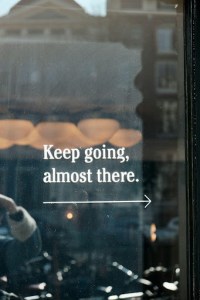
Your first rejection shouldn’t stop you from trying again. You can do this!!! But that’s only if you believe you can. You need to have a positive mindset to keep going.
Don’t give room for rejection paralysis. Keep moving forward by:
- Applying again, even after multiple rejections.
- Learning new skills and refining existing ones for better career opportunities.
- Expanding your network for fresh opportunities.
- Finding a better person to be in a romantic relationship with.
Celebrate your small wins
You can be your motivation. Learn to motivate yourself instead of relying completely on external validation. When you celebrate that little win, it boosts your dopamine, reinforcing the motivation you need to keep trying.
So, every day, celebrate that progress of:
- Completing an application.
- Sending a pitch.
- Getting interviewed.
- Having the courage to put yourself out there.
Every effort, no matter how small, counts. It’s proof of resilience.
Conclusion
Rejection in your early twenties isn’t the end – it can be a detour. While psychology proves that rejection hurts like physical pain, you also need to know that your brain has the capacity to turn that pain into growth.
So, next time you start thinking “what if I get rejected again?”, restructure your thoughts and say, “what if I’m accepted this time?” This is because rejection shouldn’t be the end of your story but a part of your journey.
Your big YES is on the way. Don’t give up!!!!
Are you going through rejections and need someone to talk to?
Reach out today for a session with Regina D’cruz to be equipped with the coping skills you need to handle rejection.